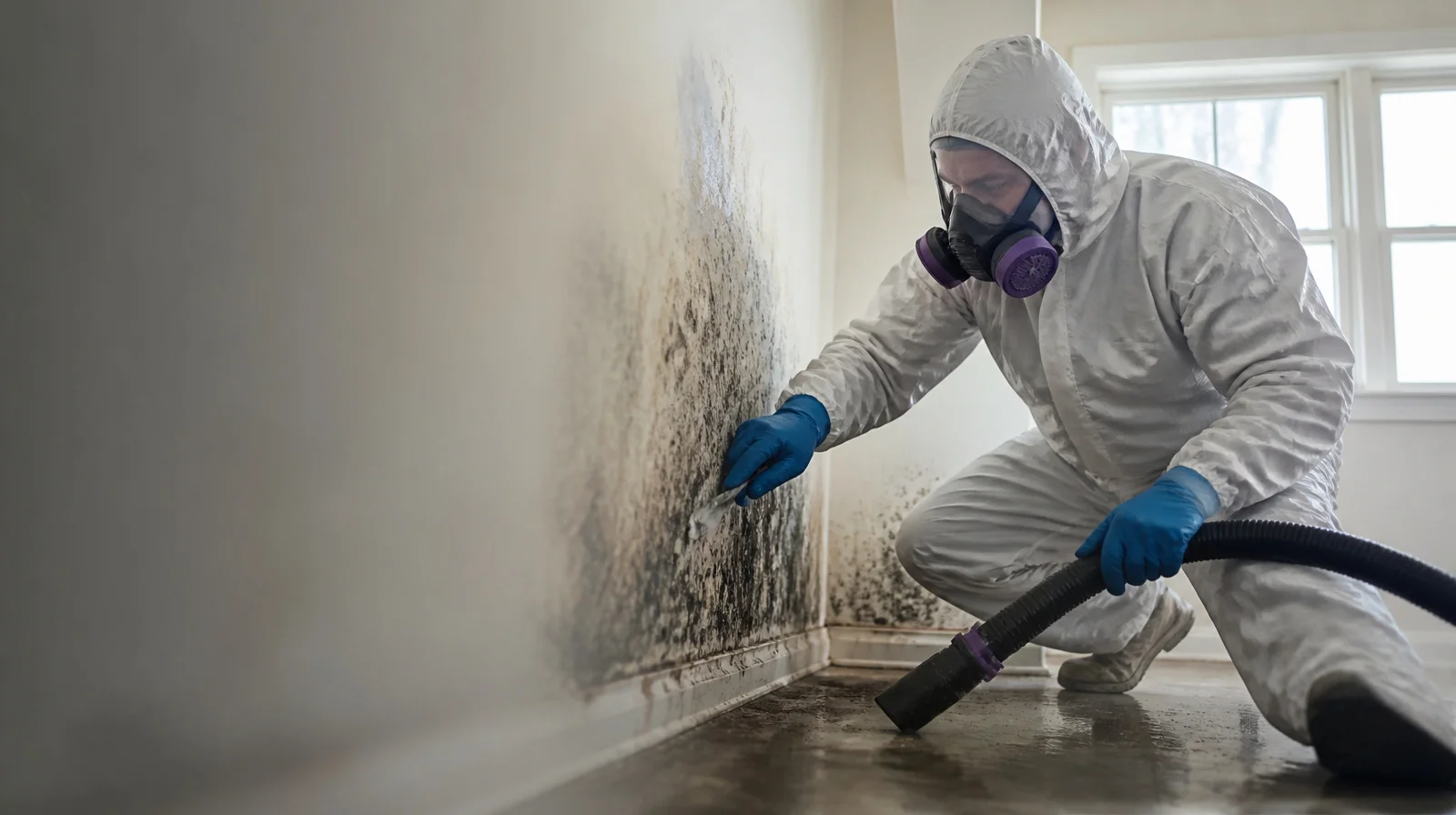
Trusted mold help from nearby Gettysburg pros
Mold Remediation in Littlestown, PA
Inspection, testing, cleanup, and repair for basements, attics, and living spaces. Weekday scheduling from our Gettysburg office.
Serving Littlestown With Local Mold Pros
For mold remediation in Littlestown, PA, Mold Remediation Gettysburg PA connects homeowners in Littlestown, PA with local mold remediation pros who know the area’s homes and weather. You get matched with specialists for mold inspection, mold testing, cleanup, and repairs tailored to the conditions commonly found in Adams County.
Matched contractors focus on moisture sources first; leaks, wet basements, and humid attics... so results hold up after the job. Clear scopes, containment plans, and photo documentation help you understand what will happen and why. Work is scheduled during normal weekday hours to respect daily routines.
Our office in Gettysburg, PA coordinates projects, and crews depart from 1400 Proline Place, #800, Gettysburg, PA 17325 for jobs in Littlestown. For questions about scheduling or service coverage, the team can be reached during business hours at (717) 420-9474.
Why Littlestown, PA homes face mold risks
Littlestown sits in a humid part of south‑central Pennsylvania where summer moisture and frequent thunderstorms drive humidity into basements, crawlspaces, and attics. Many homes mix older block foundations and vented attics with newer additions, which can hide condensation in wall cavities and under flooring. Clay and silty soils in the surrounding farmland hold groundwater after long rains, pushing moisture through hairline foundation cracks and unsealed slab joints. When indoor humidity isn’t controlled, surfaces that stay damp for 24–48 hours can support mold growth, according to the EPA’s guidance on moisture control EPA mold basics.
Getting to Littlestown from our Gettysburg office
Crews begin the day at 1400 Proline Place, #800, Gettysburg, PA 17325 in Gettysburg, PA and typically reach Littlestown by heading south on Baltimore Pike (PA‑97). This direct route brings them into town efficiently, with easy access to residential streets off PA‑97 and connections to PA‑194 for homes closer to the center of Littlestown. Because we stage equipment and supplies at the Gettysburg office, projects in Littlestown benefit from quick turnarounds for inspections, testing, and return visits during multi‑day drying or repair work.
Coverage across the Littlestown area
Service includes homes along PA‑97, properties near PA‑194, and neighborhoods around Littlestown Area High School. Whether your address is closer to the Maryland line or on the north side toward Hanover, the route options from Gettysburg keep travel predictable on weekdays. This reliable access helps matched pros coordinate containment set‑up, equipment drops, and moisture checks without wasted trips.
How local mold inspections are handled
Matched inspectors start with a focused interview about leaks, past water events, and room‑by‑room symptoms like musty odors or discoloration. They look for the building features common here: block‑wall basements with paint flaking or efflorescence, vented attics with marginal airflow, and additions where the original vapor profile changed. Moisture meters and thermal imaging help locate hidden damp spots behind baseboards, below windows, or at rim joists. Findings are documented with photos and a written plan that prioritizes moisture control, safe removal, and the order of repairs so the work stays efficient.
Mold testing when it adds clarity
Testing is useful when the source is uncertain, when a landlord‑tenant situation needs documentation, or when a clearance check supports finished repairs. In those cases, matched pros may use surface samples to identify growth on materials or air samples to compare indoor and outdoor spore levels. Sampling locations are chosen to reflect airflow patterns... near returns, doorways, and suspected cavities; so results inform the remediation plan rather than just naming a species.
Remediation that fits Littlestown homes
Every remediation plan aims to remove growth and stop it from coming back. For basements, that can include sealing off the work zone with poly sheeting, running HEPA filtration to create negative pressure, and carefully removing impacted drywall or trim. On block walls, pros often clean, abrade where appropriate, and apply compatible coatings only after moisture readings fall to targets. In attics, crews isolate the hatch, protect insulation where it tests clean, and treat sheathing and rafters while ventilation improvements; such as balancing intake and exhaust or addressing bathroom fan terminations - are coordinated.
Drying and moisture control
Dehumidifiers and air movers are placed to move dry air through problem areas without stirring dust into the rest of the home. In basements, this may focus on rim joists, bottom plates, and cold corners where condensation forms. For bathrooms, kitchens, or laundry rooms, matched contractors look for exhausts that dump air into attics or crawlspaces and propose fixes so moisture leaves the building. Where groundwater pressure is present, recommendations might include improving exterior grading, extending downspouts, or evaluating drainage systems so repairs hold after the cleanup.
Repairing what water and mold damaged
When materials have to be removed, matched carpenters and finishers repair framing, subflooring, drywall, and trim so rooms are ready for paint and re‑use. Flooring repairs can include underlayment replacement and transitions that tie into existing finishes. In basements, it’s common to rebuild lower wall sections with materials meant to tolerate humidity swings. All repairs are planned only after the area reaches stable moisture readings, and photos document the sequence so you can see what changed and why.
Situations we regularly see in Littlestown
- Homes along Baltimore Pike (PA‑97) with partially finished basements where carpet or pad stayed damp after summer storms.
- Ranch homes off PA‑194 with bathrooms venting into attics, leaving dark staining on sheathing that requires treatment and improved airflow.
- Older farmhouses on the outskirts with stone or block foundations and seasonal seepage at floor‑wall joints.
- Split‑levels near Littlestown Area High School where lower‑level closets trap moisture, leading to spotted drywall and musty odors.
Protecting lived‑in spaces during work
Littlestown homes often have tight hallways and shared HVAC systems that can move dust and spores around. Matched crews plan containment around doorways, set HEPA air scrubbers to run continuously in the work zone, and cover supply and return vents. Pathways are protected with floor coverings, and tools are staged at entries to limit back‑and‑forth through clean areas. When the job involves multi‑day drying, equipment is placed so doors and stairs remain passable.
Coordination, timing, and clear records
Weekday scheduling from Gettysburg, PA keeps site visits predictable, and the team communicates arrival windows based on the drive down PA‑97 or across PA‑194. You receive a written scope that explains containment, removal steps, and how moisture will be reduced going forward. Photo logs mark the condition before, during, and after work. Pricing depends on the size of the impacted area, how much material must be removed, and any repairs needed; for general guidance, see typical mold remediation costs in Gettysburg.
Materials and standards
Supplies used by matched pros are selected for performance and compatibility - HEPA‑rated filtration, cleaners designed for building materials, and coatings appropriate to each substrate. Work methods follow industry best practices that emphasize moisture control, source removal, and verification before rebuilding. The result is a space that returns to normal use with underlying moisture risks addressed, not simply covered up.
Why local knowledge matters
Littlestown’s mix of older basements, newer additions, and rural exposure to wind‑driven rain calls for practical fixes that suit each structure. Because crews come from nearby Gettysburg, PA, they understand how quickly humidity can jump after a storm, how low spots in yards hold water, and how attic temperatures swing in shoulder seasons. That awareness shapes targeted inspections, containment layouts that fit tight rooms, and repairs that bridge old and new construction so the fix lasts.
Our Services in Littlestown, PA
Typical mold remediation cost in Littlestown, PA from independent local contractors (same as elsewhere in the Gettysburg, PA area): $500 - $8,500. See typical mold remediation costs near Littlestown, PA.
Why Littlestown, PA Chooses Mold Remediation Gettysburg PA
Nearby and familiar
Crews travel from Gettysburg, PA via PA‑97, so visits to Littlestown stay on schedule and plans reflect the way local homes are built.
Moisture‑first approach
Matched pros track down leaks, humidity, and seepage before removing growth, so results hold through changing seasons.
Clear plans and photos
You receive a plain‑English scope and photo documentation that explains what will be done and how areas will be protected.
Care for your home
Containment, HEPA filtration, and clean pathways keep dust down and rooms usable during multi‑day work.
Repairs that finish the job
After cleanup and drying, damaged materials are rebuilt so spaces look consistent and remain durable in local conditions.
Mold Remediation FAQs in Littlestown, PA
How do mold remediation crews travel from to Littlestown, PA homes near PA‑194?
Teams usually take Baltimore Pike (PA‑97) south from Gettysburg, PA and then connect to PA‑194 to reach streets near the town center. This route keeps arrival times predictable and allows easy access to both older homes in the borough and newer houses toward Hanover.
Why do basements along Baltimore Pike (PA‑97) in Littlestown, PA see mold after humid weeks?
Warm, moist summer air condenses on cool foundation walls and floors, especially in partially finished basements. Without steady dehumidification or drainage improvements, these damp surfaces can stay wet long enough for mold to take hold.
For mold remediation in Littlestown, PA ranch homes near Littlestown Area High School, how is attic moisture addressed?
Pros check that bathroom and kitchen fans vent outdoors and that soffit and ridge ventilation are balanced. They treat affected sheathing, improve airflow, and seal bypasses that let indoor air leak into the attic.
Do mold remediation projects in Littlestown, PA require permits if walls are opened during repairs?
If work involves structural changes or significant reconstruction, the borough may require a permit. Matched contractors review the scope and coordinate with local officials when needed so repairs proceed in the correct order.
After a plumbing leak in a Littlestown, PA home off PA‑194, how soon does drying begin during mold remediation?
Once the source is stopped and safety checks are complete, drying equipment is placed right away to bring moisture down before materials are removed. Quick drying helps limit additional damage and narrows the area needing demolition.
Is mold testing helpful before listing a home in Littlestown, PA near the Maryland line?
Testing can document current conditions and confirm that indoor air is similar to outdoor levels after cleanup. It’s often used alongside an inspection report to give buyers clarity about past moisture issues and the repairs performed.
Contact Us Today for a Free Estimate
Stop mold at the source and protect your home’s air.
Schedule your mold remediation service today.
Free — no obligations