Gettysburg, PA Mold: Remediation, Repair & Testing
Mold Remediation in Penn Township, York County, PA
Friendly help from a Gettysburg-based network that understands local homes and moisture conditions.
Mold help for Penn Township homes
Mold remediation in Penn Township, York County, PA is best handled by local pros who know our region’s basements, crawlspaces, and attics. Mold Remediation Gettysburg PA connects homeowners in Penn Township, York County, PA with local mold remediation pros for mold remediation, mold damage repair, mold inspection, and mold testing. Our office is in Gettysburg, PA, and the network serves nearby communities on a regular basis.
Matched contractors focus on clear assessments, practical moisture fixes, and repairs that blend in. Weekday scheduling keeps projects moving with minimal disruption, and written reports document findings for real estate, insurance, or your own records. For office hours or general coverage questions, use (717) 420-9474.
Why mold shows up in Penn Township, York County, PA
Penn Township’s mix of mid‑century ranches, split‑levels, and newer construction sees recurring moisture from block foundations, finished basements with tight wall systems, and attic ventilation gaps. Rolling terrain around small streams like Gitts Run can leave yards saturated after long rains, raising humidity in lower levels. Summer heat in York County pushes indoor relative humidity above safe targets if dehumidification is weak, and winter air leaks can drive condensation on cold surfaces. When moisture lingers, building materials such as drywall, carpet, and OSB become vulnerable to mold growth; keeping indoor humidity near 30–50% and fixing water intrusions are key steps per EPA guidance EPA mold basics.
Serving Penn Township from nearby Gettysburg
Mold Remediation Gettysburg PA coordinates mold remediation, mold damage repair, mold inspection, and mold testing for homeowners across Penn Township, York County, PA. The network works in established neighborhoods and newer developments, from streets near Penn Township Community Park to homes along Grandview Road and the corridors connecting to Hanover.
How we reach you from 1400 Proline Place, #800, Gettysburg, PA 17325
Crews typically depart 1400 Proline Place, #800, Gettysburg, PA 17325 and head east on PA‑116 toward Hanover. This direct route brings teams into the township quickly, with simple transitions onto Wilson Avenue, York Street, or Grandview Road depending on the address. For homes on the north side of the township or closer to PA‑94, the approach along PA‑116 with a short jog north keeps travel straightforward, while addresses toward the eastern edge are reached by continuing on PA‑116 and turning onto local connectors.
Travel planning matters when drying equipment and containment materials need to arrive in good condition. By staging supplies at the shop and using the same predictable routes each week, matched pros minimize setup time and keep walkways, entries, and work zones organized from the first visit through final cleanup.
Homes and moisture patterns we see
Penn Township homes often combine finished basements with older drainage details. Cinder‑block or poured foundations can wick moisture after long rains, especially where downspouts empty near the wall or grading has settled. Split‑levels frequently have lower‑level living areas with carpeting and built‑ins - materials that trap moisture if a leak or condensation goes unnoticed for a few days.
Attics above mid‑century homes can show mold on the underside of roof sheathing when bath fans discharge into the attic or soffit vents are blocked by insulation. In newer builds, tight envelopes can hold humidity if ventilation and dehumidification aren’t balanced. Near low‑lying areas around Gitts Run, basements may see seasonal dampness that calls for better guttering, extended downspouts, and interior dehumidification rather than major excavation.
Mold inspection and testing that fit the house
Matched inspectors start with a moisture‑first approach: where water gets in, how it moves, and which materials are affected. Thermal imaging, pin/probe moisture readings, and careful visual checks help map the problem. Mold testing - air or surface... can be added when documentation is needed for a sale, when the source is unclear, or to verify that remediation has returned spore levels to typical indoor ranges. In attics and crawlspaces, surface sampling is often favored to confirm what’s on the sheathing or joists before choosing the right cleaning method.
Clear reporting explains what was found, why it matters, and the practical steps to fix it. For buyers and sellers, that documentation supports disclosures and eases lender or insurance questions. For families staying put, it becomes a maintenance plan to keep moisture controlled through the seasons.
Targeted mold remediation steps
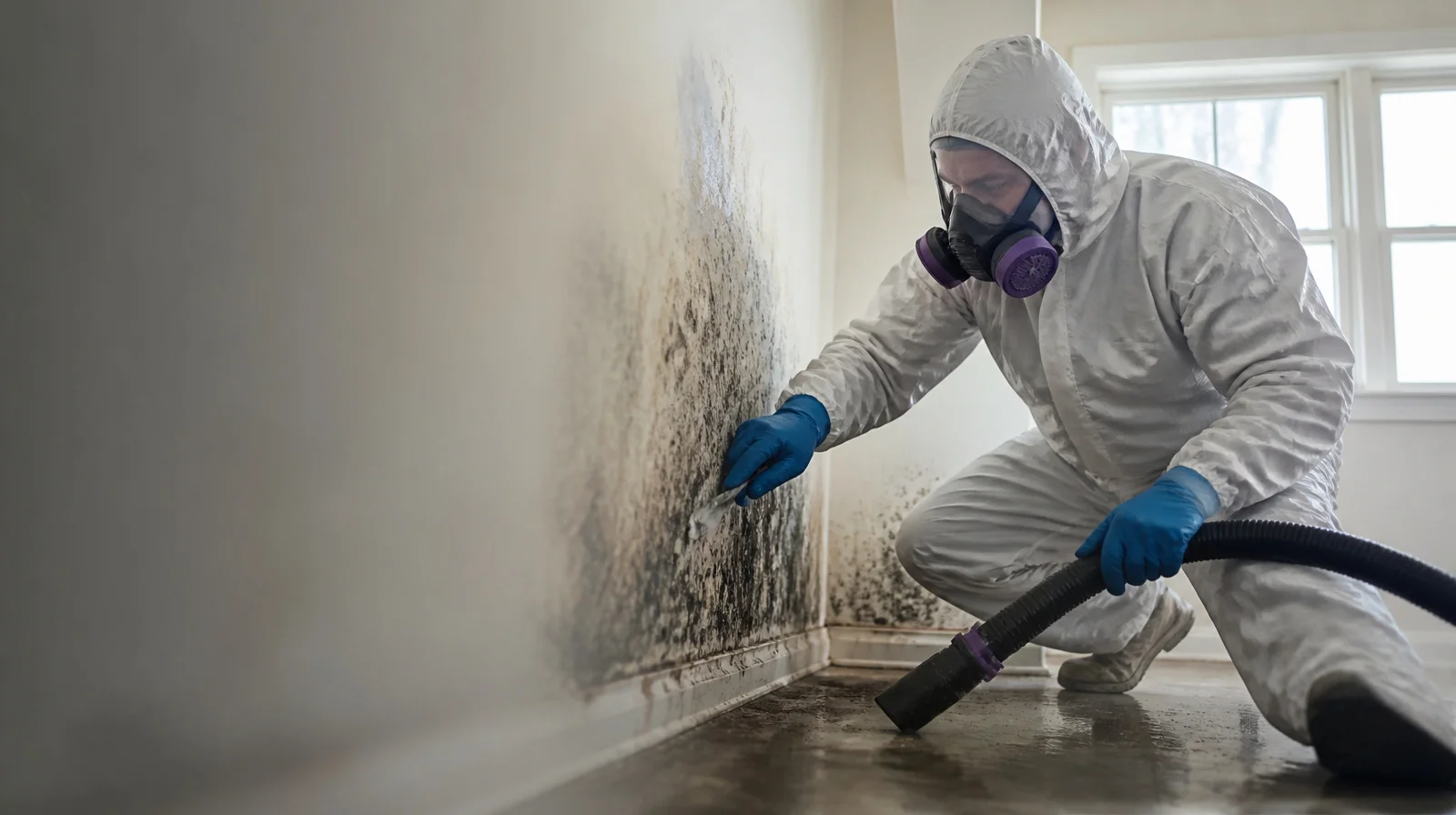
Once a plan is set, containment isolates the work area from the rest of the home using poly barriers, zipper doors, and negative air machines with HEPA filtration. This keeps dust and spores from traveling through hallways and returns. Non‑porous and semi‑porous surfaces are cleaned with HEPA vacuuming and damp wiping; stained framing can be treated with an appropriate antimicrobial and, when needed, gentle abrasion to remove residual growth.
Porous materials that can’t be cleaned to a standard - wet carpet pad, crumbling drywall, or deteriorated insulation... are removed in sealed bags and the area is cleaned again before repairs begin. In crawlspaces, matched pros address ground moisture with sealing and ventilation improvements after remediation so the fix lasts through humid months, in line with broadly accepted moisture control practices noted by the EPA EPA moisture control.
Repairs after cleanup
Mold damage repair is sized to the problem. Small sections of drywall can be patched and blended; larger areas are re‑rocked, taped, and finished to a paint‑ready surface. Trim and baseboard are reinstalled with a small reveal to reduce future wicking. Subfloor edges that swelled near sliding doors can be sistered or replaced before new finishes go down. Where cabinets or built‑ins were affected, careful removal and reinstall keeps the room layout intact while ensuring the cavity behind is dry and clean.
Moisture fixes that prevent the return
Remediation works best when moisture is controlled. Common add‑ons in Penn Township include redirecting downspouts with extensions, improving splash blocks, sealing minor foundation cracks, and adjusting grading to slope away from the home. Inside, a correctly sized dehumidifier set to maintain 45–50% RH protects finished basements through summer. Bath fans ducted to the exterior and a check of attic intake and exhaust ventilation keep roof sheathing dry in winter. Laundry areas benefit from verifying the dryer vent is smooth‑wall metal and sealed at the exterior hood to prevent lint‑laden humidity from spreading.
These fixes are simple, durable, and chosen to match the house. The goal is a dry structure that stays that way after the cleaning and repairs are complete. For ballpark ranges on typical projects, see typical mold remediation costs in Gettysburg. Actual pricing depends on the size of the affected area, materials, and the scope of repairs.
Working neatly in lived‑in homes
Pros in this network protect floors along travel paths, cover nearby furniture, and label doorways so family members know which areas are sealed off. Equipment is placed to limit noise where practical, and air scrubbers are fitted with clean filters before entering the work zone. At the end of each day, debris leaves the site and tools are stacked out of the way so rooms remain as usable as possible.
Where we work in Penn Township
Coverage includes addresses near Penn Township Community Park, homes along Grandview Road, and streets branching from PA‑116 toward Spring Grove. Whether the job is a small attic cleanup or a basement restoration with repairs, the same process... assessment, containment, remediation, and moisture control - guides the work. The result is a clean, dry space and a plan to keep it that way through York County’s changing seasons.
Communication and documentation you can keep
Homeowners receive a clear scope before work starts, then brief updates as milestones are reached - containment complete, removal finished, cleaning finished, and repairs underway. If testing is part of the job, post‑remediation results are shared with simple explanations of what the numbers mean for everyday living. Photo notes back up the written report so you have a record for future maintenance or real estate needs.
Our Services in Penn Township, York County, PA
Independent local contractors in Penn Township, York County, PA typically charge $500 - $8,500 for mold remediation, the same as across the Gettysburg, PA area. See what mold remediation costs in Penn Township, York County, PA.
Why Penn Township, York County, PA Chooses Mold Remediation Gettysburg PA
Local know‑how
Regular work in Penn Township means the matched pros understand basements near low‑lying areas like the Gitts Run valley, attic ventilation quirks in split‑levels, and how summer humidity drives mold without steady dehumidification.
Thorough assessments
Moisture mapping, targeted inspection, and testing when it adds value lead to plans that fix causes as well as the visible growth, helping results last.
Containment done right
Clean, isolated work zones with HEPA filtration protect living areas and HVAC returns so cleanup stays focused and tidy.
Repair‑minded approach
Drywall, trim, subfloors, and finishes are repaired or replaced to match the home, restoring strength and appearance after remediation.
Clear reports
Straightforward documentation explains findings, steps taken, and how to maintain a dry home; useful for homeowners, buyers, and insurers.
Mold Remediation FAQs in Penn Township, York County, PA
Which routes do mold remediation pros use from to reach homes along Grandview Road in Penn Township, York County, PA?
Teams usually travel east on PA‑116 from Gettysburg, then use York Street and local connectors to reach Grandview Road. For addresses on the northern end, a short jog toward PA‑94 keeps the approach simple. These predictable routes help crews stage equipment efficiently and arrive ready to set containment.
Why do basements near Gitts Run in Penn Township, York County, PA see mold after long rains?
Homes in low spots near the Gitts Run drainage can experience higher groundwater and seepage through block walls. If downspouts discharge close to the foundation or grading has settled, humidity rises in finished basements and mold follows. Extending downspouts, improving grading, and steady dehumidification reduce the risk.
For mold remediation in split‑levels around Penn Township Community Park in Penn Township, York County, PA, how is containment set up to protect lived‑in areas?
Pros isolate the lower level with poly barriers and zipper doors, establish negative air with HEPA filtration, and seal supply and return registers in the work zone. Travel paths are protected and a clean zone is created for tool staging so dust and spores stay out of nearby rooms.
Do mold remediation projects in Penn Township, York County, PA require permits if walls or subfloors are opened during repairs?
Permits are typically tied to structural changes or when electrical or plumbing alterations are part of the work. If repairs extend beyond surface finishes, matched contractors advise on what the township may require and coordinate timing so remediation and repairs stay on schedule.
After a pipe leak in a home off PA‑116 toward Spring Grove in Penn Township, York County, PA, how soon can drying begin?
Drying begins as soon as the water source is stopped and the area is safe to power equipment. Crews set air movers and dehumidifiers, then check moisture in walls and floors to steer the drying plan. Quick containment helps protect adjacent rooms while materials are brought back to normal moisture levels.
Is mold testing useful for home sales in Penn Township, York County, PA near the Grandview Road area?
Testing can document that indoor air and surfaces are typical for a lived‑in home after remediation or cleaning. Reports with lab results help buyers and lenders understand the condition and can reduce last‑minute concerns. Inspectors explain whether air or surface sampling fits the situation.
Contact Us Today for a Free Estimate
Stop mold at the source and protect your home’s air.
Schedule your mold remediation service today.
Free — no obligations